
Class 8 Science Half Yearly Question Paper 2025 Answer Key (NCERT Based)
निर्देश :
• सभी प्रश्न अनिवार्य हैं।
• प्रश्न (1-10) प्रत्येक एक अंक का है।
• प्रश्न (11-13) प्रत्येक दो अंक का है।
• प्रश्न (14-16) प्रत्येक तीन अंक का है।
• प्रश्न (17-19) प्रत्येक पांच अंक का है।
1. वनोन्मुलन से क्या होता है?
(क) पृथ्वी पर ताप वृद्धि
(ख) प्रदूषण के स्तर में वृद्धि
(ग) (क) और (ख)
(घ) कोई नहीं
उत्तर – (ग) (क) और (ख)
What happens due to deforestation?
(a) Temperature increase on Earth
(b) Increase in pollution levels
(c) (a) and (b)
(d) None
Answer – (c) (a) and (b)
2. निम्न में से कौन-सा जीवाश्म ईंधन नहीं है?
(क) बायोगैस
(ख) प्राकृतिक गैस
(ग) एल. पी. जी.
(घ) पेट्रोलियम
उत्तर – (क) बायोगैस
Which of the following is not fossil fuel?
(a) Biogas
(b) Natural Gas
(c) LPG
(d) Petroleum
Answer – (a) Biogas
3. प्राकृतिक संसाधन कहाँ से प्राप्त होते हैं?
(क) सूर्य के प्रकाश और वायु से
(ख) वन और वन्य जीवों से
(ग) खनिज, पेट्रोलियम और कोयले से
(घ) उपरोक्त सभी
उत्तर – (घ) उपरोक्त सभी
Where are natural resources obtained from?
(a) From sunlight and air
(b) From forests and wild animals
(c) From minerals, petroleum and coal
(d) All of the above
Answer – (d) All of the above
4. चीनी के एल्कोहल में परिवर्तन की प्रक्रिया क्या कहलाती है?
(क) नाइट्रोजन स्थिरीकरण
(ख) ढलाई
(ग) किण्वन
(घ) संक्रमण
उत्तर – (ग) किण्वन
What is the process of conversion of sugar into alcohol?
(a) Nitrogen fixation
(b) Molding
(c) Fermentation
(d) Infection
Answer – (c) Fermentation
5. मलेरिया रोग के वाहक का नाम क्या है?
(क) मादा एनोफिलीज मच्छर
(ख) घरेलू मक्खी
(ग) मधुमक्खी
(घ) जल
उत्तर – (क) मादा एनोफिलीज मच्छर
What is the name of the carrier of malaria disease?
(a) Female Anopheles mosquito
(b) Housefly
(c) Honeybee
(d) Water
Answer – (a) Female Anopheles mosquito
6. मिट्टी को उलटने-पलटने एंव पोला करने की प्रकिया …………… कहलाती है।
उत्तर – जुताई
The process of turning and compacting the soil is called ……………
Answer – Ploughing
7. …………… जीवाश्मी इंधन का एक उदाहरण है।
उत्तर – कोयला, पैट्रोलियम
…………… is an example of fossil fuel.
Answer –
8. उस पुस्तक का नाम बताइए जिसमें पौधों और जानवरों की सभी लुप्तप्राय प्रजातियों का रिकॉर्ड है।
उत्तर – रेड डेटा बुक
Name the book which contains records of all the endangered species of plants and animals.
Answer – Red Data Book
9. सूर्य नाभिकीय अभिक्रियाओं द्वारा ऊष्मा एवं प्रकाश उत्पन्न करता है। (सही / गलत)
उत्तर – सही
The Sun produces heat and light through nuclear reactions. (True / False)
Answer – True
10. कोयले में मुख्य रूप से …………… तत्त्व पाया जाता है।
उत्तर – कार्बन
Coal mainly consists of mainly …………..
Answer – Carbon
11. खाद्य परिरक्षक क्या हैं? कुछ सामान्य खाद्य परिरक्षकों की व्याख्या कीजिए।
उत्तर – वे रासायनिक पदार्थ जो खाद्य पदार्थों को खराब होने से बचाने और उनके पोषक मूल्य को लंबे समय तक बनाए रखने के लिए उनमें मिलाए जाते हैं, खाद्य परिरक्षक कहलाते हैं। उदाहरण के लिए, नमक, चीनी, तेल, सिरका और सोडियम बेंजोएट आदि।
What are the food preservatives? Explain some common food preservatives.
Answer – The chemical substances which are added to the food materials to prevent their spoilage and to retain their nutritive value for long periods are called food preservatives. For example, salt, sugar, oil, vinegar and sodium benzoate etc.
12. क्या वनों की कटाई ग्लोबल वार्मिंग से जुड़ी हुई है? व्याख्या करें।
उत्तर – हाँ, वनों की कटाई ग्लोबल वार्मिंग से जुड़ी है। जब पेड़ काटे जाते हैं तो वातावरण में कार्बन डाइऑक्साइड की मात्रा बढ़ जाती है। इससे पृथ्वी की सतह के तापमान में वृद्धि होती है जिसका अर्थ है ग्लोबल वार्मिंग। पृथ्वी के तापमान में वृद्धि से जल चक्र गड़बड़ा जाता है और इससे वर्षा में कमी आ सकती है।
Is deforestation associated with global warming? Explain.
Answer – Yes, deforestation associated with global warming. When trees are cut down, then increase the amount of carbon dioxide in the atmosphere. This leads to increase in the temperature of the earth’s surface which means global warming. The increase in the temperature of the earth disturbs the water cycle and this can lead to decrease in the rainfall.
13. एंटीबायोटिक क्या है?
उत्तर – एंटीबायोटिक एक ऐसी दवा है जो हानिकारक जीवाणुओं (बैक्टीरिया) से होने वाले संक्रमणों का उपचार और रोकथाम करने के लिए उपयोग की जाती है। यह या तो जीवाणुओं को मारकर या उनके बढ़ने और प्रजनन को रोककर कार्य करती है। एंटीबायोटिक शब्द का अर्थ है “जीवन के विरुद्ध।” एंटीबायोटिक्स निमोनिया और क्षय रोग (टी.बी.) जैसी बीमारियों के इलाज में बहुत उपयोगी होती हैं। हालांकि, इनका प्रयोग सावधानीपूर्वक करना चाहिए ताकि एंटीबायोटिक प्रतिरोध (रेज़िस्टेंस) से बचा जा सके।
What is an antibiotic?
Answer – An antibiotic is a medicine used to treat and prevent infections caused by harmful bacteria. It works by either killing the bacteria or stopping them from growing and reproducing. The term antibiotic means “against life.” Antibiotics are very useful in curing diseases like pneumonia and tuberculosis. However, they should be used carefully to avoid antibiotic resistance.
14. समझाइए, उर्वरक खाद से किस प्रकार भिन्न है?
उत्तर –
| उर्वरक | खाद |
| 1. यह एक अकार्बनिक लवण है। | 1. यह एक प्राकृतिक पदार्थ है। |
| 2. इसे कारखानों में बनाया जाता है। | 2. इसे खेत में बनाया जाता है। |
| 3. ये मृदा को ह्यूमस प्रदान नही करते। | 3. ये मृदा को ह्यूमस प्रदान करते हैं। |
Explain how fertilizers are different from manure?
Answer –
| Fertilizer | Manure |
| 1. It is an inorganic salt. | 1. It is a natural substance. |
| 2. It is made in factories. | 2. It is made in the field. |
| 3. They do not provide humus to the soil. | 3. They provide humus to the soil. |
15. हमें कोयला और पेट्रोलियम जैसे संसाधनों का सीमित मात्रा में उपयोग क्यों करना चाहिए?
उत्तर – कोयला और पेट्रोलियम जीवाश्म ईंधन हैं जिन्हें बनने में लाखों वर्ष लगते हैं। वे प्राकृतिक संसाधन हैं और आपूर्ति में सीमित हैं। ये संपूर्ण अनवीकरणीय संसाधन हैं। साथ ही, यह जीवाश्म ईंधन जलने पर कार्बन डाइऑक्साइड पैदा करता है जो हमारे पर्यावरण के लिए बहुत हानिकारक है, जिससे वायु प्रदूषण के साथ-साथ ग्लोबल वार्मिंग भी होती है। अतः हमें कोयला एवं पेट्रोलियम का प्रयोग सीमित मात्रा में करना चाहिए।
Why should we use resources like coal and petroleum in limit?
Answer – Coal and petroleum are fossil fuels that require millions of years to be formed. They are natural resources and are limited in supply. These are exhaustible nonrenewable resources. Also, this fossil fuel produces carbon dioxide on burning which is very harmful to our environment causing air pollution as well as global warming. Hence, we should use coal and petroleum in limited amounts.
16. दिए गए चित्र को नामांकित करें और इनके बीच तीन अंतर बताएँ।
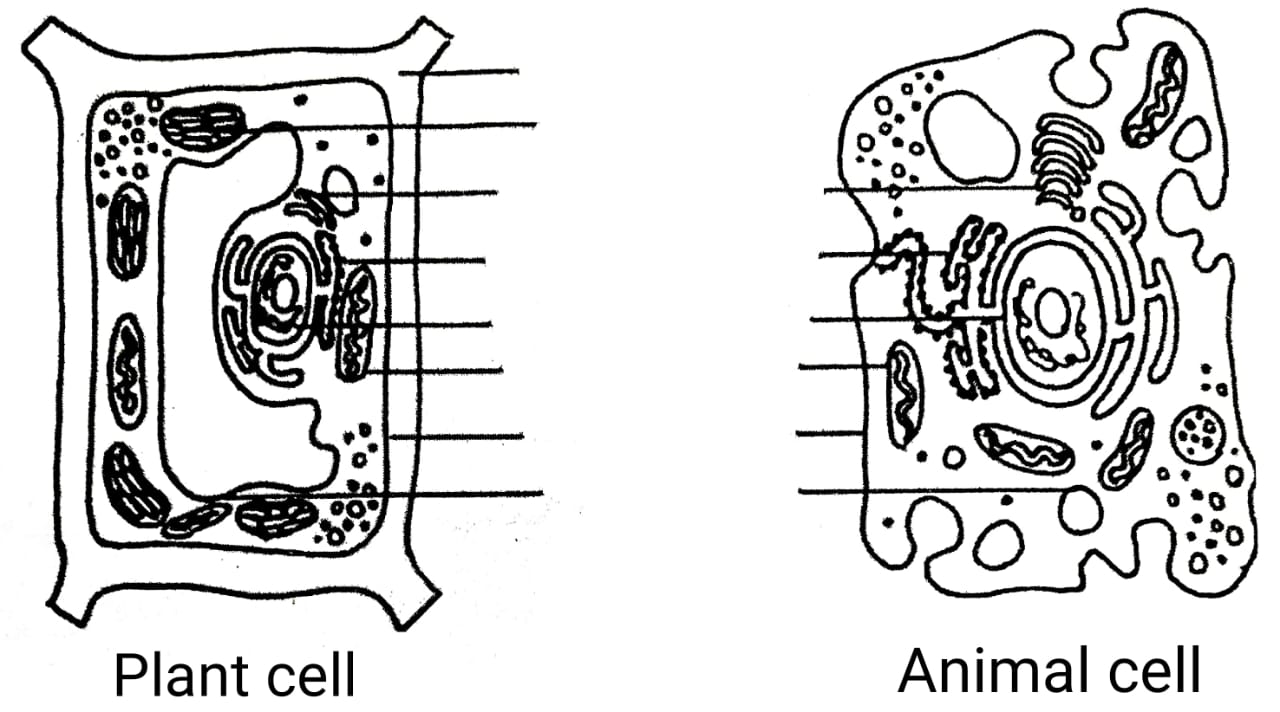
उत्तर –
| पादप कोशिका | जंतु कोशिका |
| 1. पादप कोशिका एक कठोर कोशिका भित्ति से घिरी होती है। | 1. जंतु कोशिका में कोशिका भित्ति नहीं होती है। |
| 2. ये आकार में नियमित या आयताकार होती है। | 2. ये आकार में अनियमित या गोल होती है। |
| 3. ये आकार में बड़ी होती हैं। | 3. ये आकार में छोटी होती हैं। |
Identify the given picture and write three comparisons between them.
Answer –
| Plant Cell | Animal Cell |
| 1. A plant cell is surrounded by a rigid cell wall. | 1. An animal cell does not have a cell wall. |
| 2. These are regular or rectangular in shape. | 2. These are irregular or round in shape. |
| 3. These are larger in size. | 3. These are smaller in size. |
17. हमारे जीवन में सूक्ष्मजीवों की उपयोगिता पर पाँच पंक्तियाँ लिखिए।
उत्तर – (i) सूक्ष्म जीव नाइट्रोजन का स्थिरीकरण करके मृदा की उपजाऊ शक्ति बढ़ाते हैं।
(ii) दूध से दही बनाने में सहायक हैं।
(iii) प्रतिजैविकों के निर्माण में उपयोगी है।
(iv) चमड़े को साफ करने में उपयोगी हैं।
(v) सूक्ष्मजीव कम्पोष्ट खाद बनाने में बहुत उपयोगी हैं।
(vi) प्राकृतिक सफाई में बहुत योगदान देते हैं।
Write five lines on the usefulness of microorganisms in our lives.
Answer – (i) Microorganisms increase the fertility of soil by fixing nitrogen.
(ii) It is helpful in making curd from milk.
(iii) Useful in manufacturing of antibiotics.
(iv) Useful in cleaning leather.
(v) Microorganisms are very useful in making compost.
(vi) Contribute greatly to natural cleaning.
18. सीएनजी और एलपीजी को ईंधन के रूप में उपयोग करने के क्या फायदे हैं?
उत्तर – संपीड़ित प्राकृतिक गैस (सीएनजी) और तरलीकृत पेट्रोलियम गैस (एलपीजी) को ईंधन के रूप में उपयोग करने के फायदे इस प्रकार हैं :
(i) जलने पर ये अन्य ईंधन जैसे केरोसीन, कोयला आदि की तुलना में बहुत अधिक ऊष्मा ऊर्जा देते हैं
(ii) इन्हें जलाने पर धुआं नहीं निकलता, क्योंकि ये स्वच्छ ईंधन हैं।
(iii) उनकी कीमतें कम हैं।
(iv) वे आसानी से उपलब्ध हैं।
(v) इन्हें सिलेंडर या पाइपलाइन द्वारा आसानी से ले जाया जा सकता है।
What are the advantages of using CNG and LPG as fuels?
Answer – The advantages of using compressed natural gas (CNG) and liquified petroleum gas (LPG) as fuels is as follows :
(i) They give a lot of heat energy when burnt as compared to other fuels like kerosene, coal, etc
(ii) They do not emit smoke when burnt, as they are clean fuels.
(iii) They have low prices.
(iv) They are easily available.
(v) They can be easily transported by cylinders or pipelines.
19. मोमबती की ज्वाला का चित्र सहित वर्णन करें।
उत्तर –
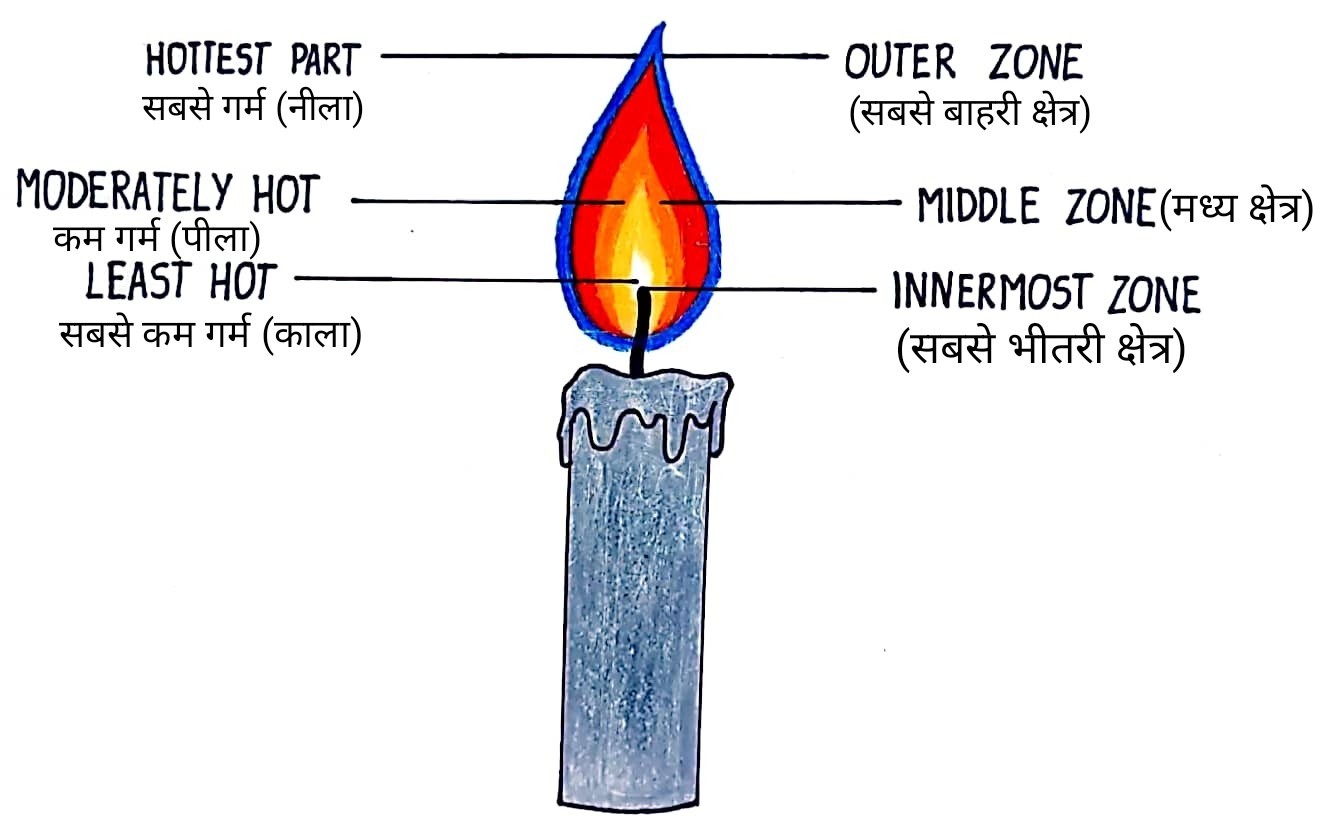
• मोमबत्ती की ज्वाला के तीन भाग होते हैं :
(i) सबसे भीतरी क्षेत्र – यह बहुत गहरे काले रंग का दिखाई देता है। इस भाग में दहनशील ईंधन के गर्म, बिना जले वाष्प होते हैं। यह लौ का सबसे कम गर्म / सबसे ठंडा हिस्सा होता है।
(ii) मध्य क्षेत्र – लौ का यह हिस्सा पीले रंग का दिखाई देता है। यह बहुत चमकीला और चमकदार होता है। इस क्षेत्र में, हवा की सीमित पहुँच के कारण ईंधन वाष्प आंशिक रूप से जलता है। इस आंशिक जलने से कार्बन कण बनते हैं, जो धुएँ और कालिख के रूप में दिखाई देते हैं। इसका तापमान मध्यम होता है।
(iii) सबसे बाहरी क्षेत्र – ज्वाला का यह भाग नीले रंग का दिखाई देता है। इस क्षेत्र में, इसके चारों ओर हवा की पूरी पहुँच के कारण पूर्ण दहन होता है। यह ज्वाला का सबसे गर्म भाग होता है और इसलिए इसका तापमान सबसे अधिक होता है।
Describe the candle flame with the help of a suitable diagram.
Answer – A candle flame has three parts :
(i) Innermost zone – This appears black in colour. This part consists of hot, unburnt vapours of the combustible fuel. This is the least hot / coldest part of the flame.
(ii) Middle zone – This part of the flame appears yellow in colour. It is very bright and luminous. In this zone, the fuel vapours burn partially due to the limited access to air. This partial burning leads to the production of carbon particles, which appear as smoke and soot. It has a moderate temperature.
(iii) Outermost zone – This part of the flame appears blue in colour. In this zone, complete combustion takes place due to complete access of air around it. This is the hottest part of the flame and therefore, has the highest temperature.